
Ayers Rock, or Uluru, is an Australian icon and a stargazer’s paradise. Located in the Uluru-Kata Tjuta National Park, this World Heritage site is the ultimate night sky experience. In this longer post, we’ll go into more detail on why Uluru is good for stargazing, what you can see and how to make the most of your stargazing trip.
Uluru is good for stargazing
- No Light Pollution
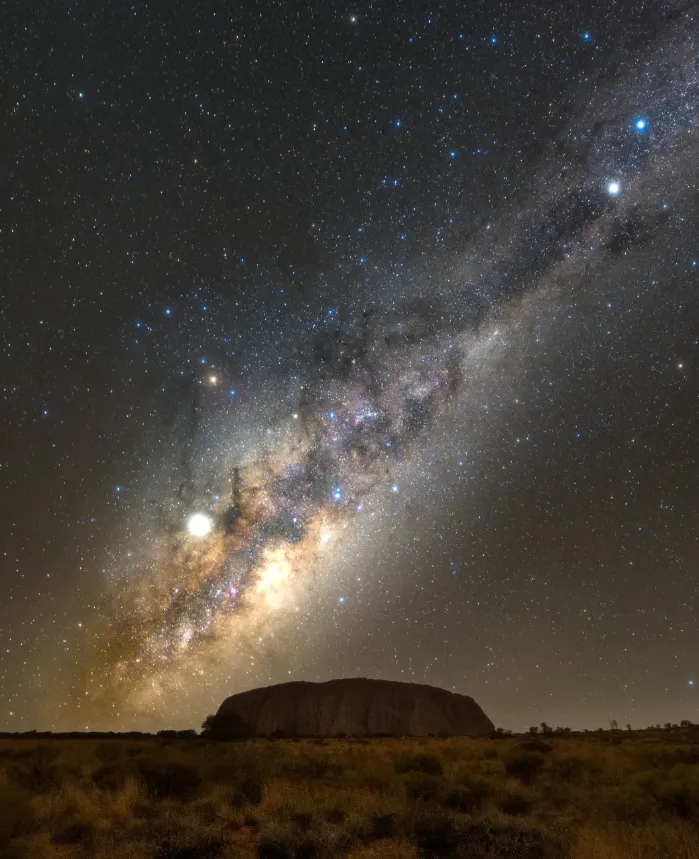
Uluru’s isolation means no light pollution, which is a big plus for stargazing. The nearest cities, Alice Springs and others, are hours away and the lights from these urban areas don’t reach the park. This means a dark night sky perfect for star gazing. The lack of city lights and artificial light sources means an unobstructed view of the night sky and a better stargazing experience. - Good Stargazing Weather
The dry climate of Central Australia is good stargazing weather. The clear, crisp air reduces atmospheric distortion and you get a better view of the night sky. The dry season, May to September, is the best time. The air is cool and the skies are clear, perfect for both amateur and serious astronomers to get out and about and explore the stars above. - Dark Sky
Uluru has a dark sky with minimal atmospheric pollution. This is perfect for seeing the southern hemisphere’s constellations and celestial events. The combination of minimal atmosphere and dark sky means you’ll see billions of stars and amazing sky objects. - Access to Unique Astronomical Events
Uluru is a great spot to see astronomical events. Whether it’s the Southern Cross (Crux), the Milky Way or meteor showers like the Perseids and Geminids, the site is the perfect place for these events. With a resident astronomer and guided Uluru tours, you can learn more about astronomy and see these events closely.
What to See in the Night Sky

- Southern Hemisphere Stars
In the southern hemisphere, you’ll see stars that are not visible from the northern hemisphere. The Southern Cross is a prominent feature, along with other bright stars that make up the southern night sky. The astronomy knowledge from your local guide will help you identify these objects and understand what they are. - The Milky Way
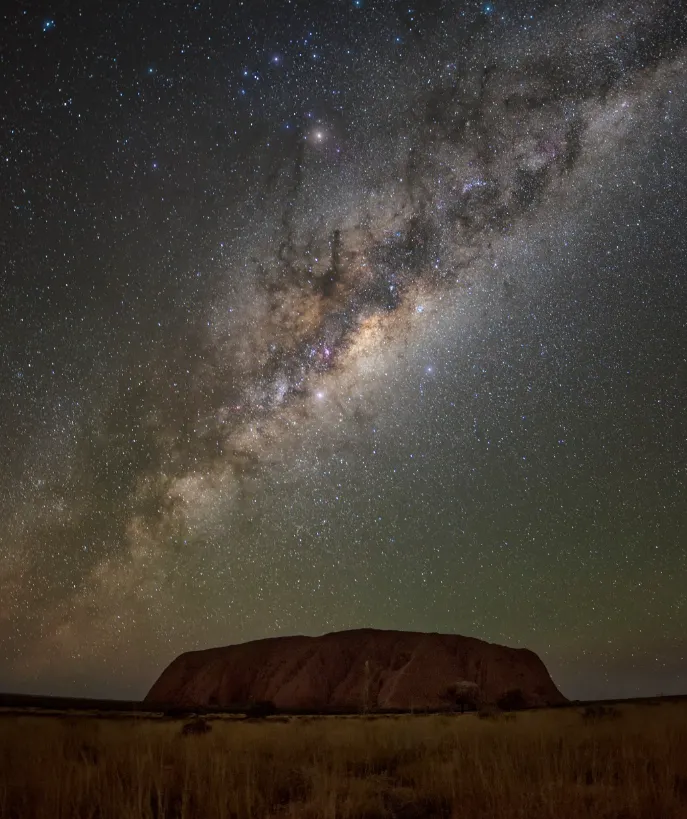
Uluru has one of the best views of the Milky Way which stretches across the sky with billions of stars. The lack of artificial light and dark sky makes this view truly amazing. The big night sky of Uluru provides a 360 degree view of this stunning galaxy.
- Planets and Meteor Showers
Venus, Mars and Jupiter are visible at certain times of the year. Meteor showers like the Perseids in August or Geminids in December add to the excitement. These are part of the ultimate stargazing experience, watching natural wonders in one of the most famous places on earth.
Uluru Stargazing Tips
- Plan for the Right Time
For the best stargazing, plan your visit for a moonless night. New moon or crescent moon phases are best as they give the darkest sky. Check the moonrise and moonset times to get the best viewing conditions. - Bring the Right Stuff
While the naked eye is enough for many sights, bringing a telescope or binoculars will enhance your experience. An astronomy app or detailed astronomy guide will help you identify and track celestial objects. Make sure you have the right astronomy gear to enjoy the stargazing fully. - Join a Tour
Consider joining a guided astronomy tour, such as the Uluru Astro Stargazing 3 Day Uluru tour or the Earth Sanctuary Astro Tour. These tours include stargazing sessions with expert commentary from resident astronomers who can tell you about Indigenous stories and ancient culture, adding extra depth to your experience. - Dress Warm
It gets cold at night in the Outback. Bring warm clothes and a blanket to stay cozy as you enjoy the night air and the views. A blanket for people can be especially useful for stargazing. - Be Respectful
Uluru is a sacred site for the Anangu people. Follow all park rules, stay on the paths and don’t use bright artificial lights. Respect the environment and the ancient culture of the area to preserve this special place.
FAQ
What’s the best time to stargaze at Uluru?
The best time to stargaze at Uluru is during the dry season from May to September when the weather is clear and the skies are dark. This is the best stargazing weather with minimal pollution.
Do I need special gear?
You can stargaze with your eyes only but bringing a telescope or binoculars will enhance the experience. An astronomy app or stargazing guide will also help you identify objects in the sky. If you want to get the best experience, use high quality astronomy gear.
Are there stargazing tours?
Yes, there are stargazing tours, such as the Uluru Astro Stargazing Tour and the Earth Sanctuary Astro Tour. These tours often include telescopes and expert commentary to help you understand the night sky and local Indigenous stories.
How do I check the weather before I go?
Check the local weather forecast online or use a weather app to get real-time updates on the conditions. Look for clear skies and minimal moonlight for the best stargazing. Ideal stargazing weather is cool night air and minimal cloud cover.
Are there any stargazing restrictions?
Yes, be respectful of Uluru’s sacredness. Follow all park rules, stay on the paths and don’t use bright lights. Join public viewing nights or stargazing sessions run by the park to make sure you’re following all the rules.